
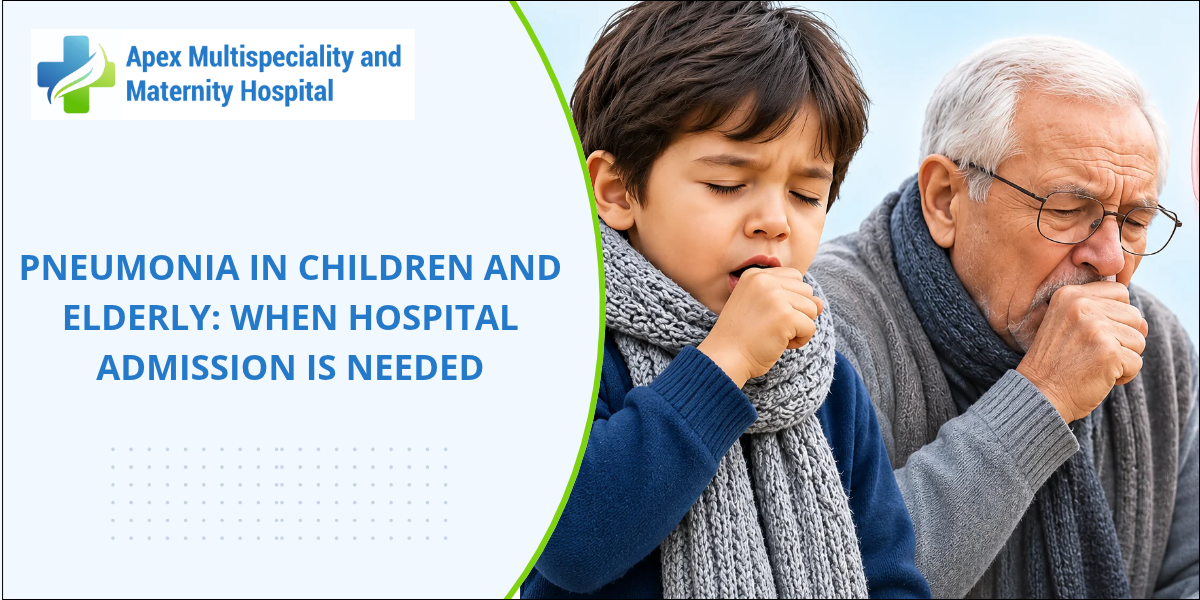
A cough that will not settle, a fever that keeps returning or a child who is breathing faster than usual can all point to a lung infection. Pneumonia is an infection of the lungs that can be mild in a healthy adult but more serious in young children and older adults. This guide explains pneumonia in children and elderly patients: who is at higher risk, how pneumonia looks different in children and the elderly, and when hospital admission is needed.
If a child or older person has trouble breathing, blue lips, confusion or cannot drink, go to an emergency department without delay. This article is general information and does not replace a medical examination.
What Is Pneumonia?
In pneumonia, the tiny air sacs in one or both lungs become inflamed and may fill with fluid or pus. It can be caused by bacteria, viruses or, less often, fungi. Pneumonia often follows a cold or flu, and winter and the post-monsoon months see many cases of chest infections.
Doctors usually suspect pneumonia from symptoms and a chest examination, then confirm it with tests such as a chest X-ray, pulse oximetry (a finger clip that measures oxygen) and blood tests.
Why Are Children and Older Adults at Higher Risk?
- Infants and young children have smaller airways, an immune system that is still developing and often have close contact with other children. Malnutrition, premature birth, exposure to smoke from chulhas or cigarettes and incomplete vaccination add to the risk.
- Older adults may have a weaker immune response, reduced cough strength and chronic conditions such as diabetes, heart disease, COPD or kidney disease. Swallowing problems and long bed rest can allow food or saliva to enter the lungs.
People with weak immunity and those who smoke are also more vulnerable.
Symptoms of Pneumonia in Children
Signs may include:
- Fever and cough, which may be dry or produce phlegm
- Fast breathing or breathing that looks laboured
- Chest indrawing, where the lower chest pulls in when the child breathes
- Wheeze or grunting sounds
- Poor feeding, vomiting or refusing the breast or bottle
- Unusual sleepiness, irritability or a weak cry
- Bluish lips or fingertips, which is an emergency
Breathing rates that doctors consider fast are above about 50 breaths a minute in infants of 2 to 11 months and above about 40 breaths a minute in children of 1 to 5 years. A parent can count breaths for one full minute while the child is calm.
Symptoms of Pneumonia in Older Adults
Pneumonia can show up differently in the elderly. The classic cough and high fever may be mild or absent. Look out for:
- New confusion, drowsiness or a sudden change in behaviour
- Weakness, falls or loss of appetite
- Fast or shallow breathing and breathlessness, even on light activity
- Cough with phlegm, chest pain on breathing, or a low-grade fever
- Worsening of an existing illness such as diabetes or heart failure
Because signs can be subtle, any unexplained sudden change in an older person during or after a chest infection should be checked by a doctor.
When Is Hospital Admission Needed?
Many people with mild pneumonia can be treated at home with medicines, rest, fluids and follow-up. Admission is considered when the illness is more serious or home treatment is not safe. The decision rests on the doctor’s examination, oxygen level and test results.
n children, admission is usually needed if:
- Chest indrawing, grunting or very fast breathing is present
- Oxygen level is low on pulse oximetry
- The child cannot drink or feed, vomits everything or looks dehydrated
- The child is very drowsy, unusually floppy, has a seizure or has bluish lips
- The baby is under two to three months old
- There is severe malnutrition, a heart or lung condition, or weak immunity
- There is no improvement after one to two days of oral treatment, or the child worsens
- Home care is difficult, or follow-up cannot be assured
n older adults, admission is usually needed if:
- There is confusion or a sudden drop in alertness
- Breathing is fast or difficult, or the oxygen level is low
- Blood pressure is low or the person is dizzy and dehydrated
- The person has other illnesses such as COPD, diabetes, heart, liver or kidney disease
- The person cannot take oral medicines or fluids, or is vomiting
- There is no improvement within two to three days of starting treatment
- The person lives alone or has no one to help with care
Doctors may use scoring tools that include confusion, breathing rate, blood pressure and age to judge severity. Having one of these features does not always mean an ICU stay, but it is a reason to be assessed urgently.
What Happens During Hospital Care?
Care depends on the cause and severity. It may include:
- Oxygen support if levels are low
- Antibiotics when a bacterial infection is suspected, or other medicines when another cause is found
- IV fluids and nutrition if eating and drinking are difficult
- Medicines for fever and cough relief where appropriate
- Close monitoring of breathing, oxygen level, heart rate and blood pressure
- Chest physiotherapy and breathing exercises when advised
- Critical care with ventilator support for respiratory failure, in rare severe cases
Do not start antibiotics at home without a doctor’s advice. Incomplete or unnecessary antibiotic use can make later infections harder to treat.
Recovery and Follow-Up
Fever often settles in a few days, but cough and tiredness may last for weeks. Rest, fluids, good nutrition and any prescribed medicines help recovery. A repeat X-ray is advised only in selected cases, such as in older adults, smokers or when symptoms persist.
How to Lower the Risk of Pneumonia
- Keep up with vaccinations: childhood vaccines as per the pediatrician’s schedule, a yearly flu shot and pneumococcal vaccination as advised for older adults or high-risk people
- Breastfeed infants and ensure good nutrition for the family
- Avoid exposure to tobacco and cooking smoke, and manage air pollution exposure, such as masks on high-pollution days
- Wash hands often and keep sick contacts away from infants and older adults
- Keep diabetes, COPD and heart disease under control
- Seek medical care early for a cold that is turning into breathing difficulty
Frequently Asked Questions
s pneumonia contagious?
The germs that cause pneumonia can spread through coughs and sneezes, so hygiene matters. Not everyone exposed will develop pneumonia.
an pneumonia be treated at home?
Mild cases can be managed at home under medical guidance. Children with fast breathing or older adults with confusion need assessment for admission.
ow is walking pneumonia different?
It is a mild form with less severe symptoms, so the person may remain active. It still needs a doctor’s evaluation.
oes a normal temperature rule out pneumonia in an older person?
No. Older adults may not have a high fever. Confusion, weakness or breathlessness can be the only signs.
hould my child get a pneumonia vaccine?
Vaccination can lower the risk of some types of pneumonia. Ask your pediatrician about the schedule that suits your child.
Care for Children and Adults at Apex Hospital, Kondhwa
Apex Multispeciality and Maternity Hospital in Kondhwa, Pune has a pediatrics department, a pulmonology department and 24-hour emergency medical care, along with an ICU. Dr. Munaf Inamdar, MD (Medicine) and Director of the hospital, consults in general medicine, and the OPD schedule on the website lists the pediatric consultants.
- Address: Madina Hotel Lane, Kausar Baugh, Kondhwa, Pune, Maharashtra 411048
- Phone: +91 75591 93659
- Hours: Open 24 hours
Call the hospital or book an appointment if you are worried about a cough, fast breathing or a chest infection. For breathing trouble or confusion, come to the emergency department immediately.